Her Article Library > Power Profile > Fiona's World

|
|
Fiona's World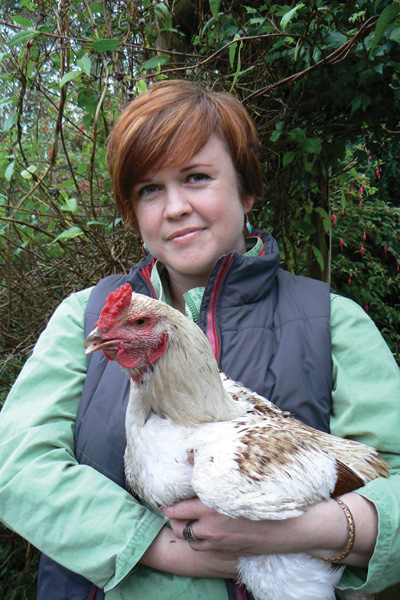 From the Greasy Spoon to the English Channel, one Kiwi chef is making a mark of delicious proportions From the Greasy Spoon to the English Channel, one Kiwi chef is making a mark of delicious proportionsFiona Were, Head Chef at The Greenbank Hotel in Cornwall, is testimony that a little goes a long way. After training at Christchurch Polytechnic back in the early 90s she has been in the United Kingdom for 14 years, having met her partner, Iain while he was working and travelling in New Zealand. He then took her back to his beloved West Country. Her career to date includes being Training and Development Chef for Jamie Oliver’s Fifteen Cornwall in its inaugural year and she has been named as one of the top 10 female chefs in the United Kingdom in the Independent on Sunday. Fiona’s style of cooking focuses on fresh, local and seasonal produce with international twists. She is passionate about only using free range poultry and fish caught using ethical methods from sustainable resources, and will be ensuring this ethos is continued wherever she works. True modern, British cuisine is Fiona’s signature. She fuses styles, techniques and flavours to shape an irresistible menu. Bursting with innovative touches every dish promises to fire the imagination and palate. What was your first job in a commercial kitchen? I worked as a kitchen hand at a 'greasy spoon' cafe in Napier. My boss was a Malaysian woman and she was very strict. I worked hard on my holidays from university. When we moved to Christchurch, I started as a kitchen hand at the Hotel Russley then moved on to Michaels and the Park Royal while I was at college doing my chef training. Are you now a citizen of the United Kingdom? No, I have residency, which means I can stay indefinitely. I have thought about having dual citizenship, but to get that a British passport would cost around £700. I can think of better things to spend that kind of money on. What do you miss about New Zealand? Feijoas, whitebait, vineyards, yams, kumara, being able to have sushi any day of the week, being able to be in the countryside and not see anyone else Tell us how you met your partner, Iain: We met at a youth hostel in Parnell. I was in Auckland, temporarily staying at the hostel until I could find a flat and trying to save money so I could travel to the United Kingdom. Iain was back at the youth hostel after travelling around New Zealand. He was working over in Brown's Bay. I already had my ticket booked to come to the United Kingdom before we met, but ended up bringing my travel plans forward. Iain's visa was coming to an end and he was returning to the United Kingdom to attend university. Do you have children? I have a family of 'children' at work. I also have 20 or so chickens and a cat that always seems to be hungry for food and attention, so that is quite enough for me to be honest. What is your favourite thing about Cornwall? Our 160-year-old granite miner's cottage, with sweeping views across fields out towards St Ives. It has a wonderful wood burner set in an inglenook fireplace and stacks of character features. We have a garden big enough to grow our own vegetables, apple trees that produce crops large enough to make gallons of homemade cider and space for our flock of rare-breed Indian Game and Red Dorking chickens. Cooking is mostly learned in a kitchen from masters. Who have your mentors been and what key skills have you adapted from them? Eleonora Kramer, a Bavarian Chef, was a huge influence on me when I was working at the Park Royal. She was inspirational, incredibly talented and a tireless perfectionist. I have worked with many chefs during my career, and I believe you learn something from everyone you work with, even if it is something small, but Eleonora instilled the need for dedication and hard work to gain respect in this industry. I have recently attended a chocolate course at Steins Cookery School, taught by Mark Tilling, champion British Chocolatier, and it was amazing. Now I am collecting equipment to enable me to do chocolate work. Why is free range produce so important to you? It seems pretty obvious to me. I cannot comprehend why anyone doesn't consider it important. However, I know there is a long way to go, and it’s not just down to living conditions. We have all done this to the food chain because we want vast quantities of cheap chicken and we want it quickly. This means that we have been so clever to breed types of poultry that are table-ready in eight weeks. We have tried rearing two chickens of the commercial breed at home, in the hope that they would have a better life roaming around, but sadly they just wanted to sit around and eat all day. It was a pretty miserable existence for them and contradicted the reasons why we keep chickens ourselves. The hen eventually could not stand as her legs were incapable of supporting her weight after just nine weeks. We cross our rare breeds at home, using breeds popular for this purpose since Victorian times, for table birds and they are not ready for 27 weeks. Their bones are properly formed, they have a varied diet and are free to exercise at will, which they do. Battery cages are being banned in the United Kingdom in early 2012, at last. We started our poultry keeping with five ex-battery hens, which was a very rewarding experience, but the poor things were so worn out after intensively laying an egg nearly every day they did not live for long after leaving the battery. They came to us sparsely feathered, with their beaks trimmed and very pale combs. In the relatively short time we had them they quickly adapted to the outside world, performing normal chicken behaviours such as scratching and dust bathing, which they had never done in their battery cages. Battery farming and intensive rearing of poultry is abhorrent to me. What is the most essential item in your kitchen? At the risk of sounding pragmatic, it would have to be water. If we don't have it we cannot do anything. What do you cook at home that you never cook at the restaurant? Quite a lot actually. I do much simpler food at home, but there is always a restaurant feel to it I suppose, as this is what I do. So I'll cook Spaghetti Bolognese, but will make the pasta to go with it; a sausage sandwich for Sunday brunch will be more elaborate with rocket from our garden, eggs freshly laid by our chickens, and homemade chutney or chilli sauce. I love big flavours, so we have a good selection of spices available that can be added to even the simplest of meals to give them dimension and interest. I like to experiment at home and Iain is always a willing guinea pig. Sourcing the best possible ingredients is a big part of what a chef does. How do you choose your suppliers? Supporting local producers is incredibly important and even more so now with the emphasis on reducing food miles. Fortunately in Cornwall we have quite a few small producers who supply the restaurant with excellent ingredients. We are surrounded by the sea, so fish and seafood are particularly good, but we also have excellent Terras Farm duck from Roger Olver, rare-breed pork from Sally Lugg at Primrose Herd, and I source free range chicken from Keith Whickett in Bude. There are so many artisan cheesemakers now as well. I have really seen the food scene grow here over the last few years. With regards to how I source, I need to know that production methods are ethical and sustainable. Provenance and traceability are extremely important to me. What do you consider to be your best creation, and what are the classics that you’ll forever keep on your menu? The punters love my crab cocktail and I can't seem to take that off the menu. Over the summer its whole grilled megrim sole with brown shrimps and caper butter, as well. Both very classic dishes. I wouldn't say they were my best, but they sell incredibly well and are delicious in their simplicity. What's your regular comfort meal? A bowl of aromatically flavoured noodle broth, with anything from chicken, duck, pork, prawns or squash and plenty of seasonal greens. Sometimes I load it with chilli, other times I go for lime leaves or miso. You're stranded on a desert island. What five foods would you want with you? And what would you make?
Being at the backdoor of so many exotic countries, has your curiosity of other cuisines heightened? I have always been interested in foods from other cultures and countries. I do a lot of research through books and TV programmes. Travelling to other countries further enhances my interest and cements the flavours and aromas of the foods that I may have read about. It’s fascinating and thoroughly enjoyable. There is still so much to find out about and I doubt anyone can ever learn everything there is to know about food in their lifetime. I love that; it’s exciting and challenging. Have you tried to incorporate New Zealand produce into any of your dishes? Reducing food miles is paramount now, so it would be irresponsible to use ingredients from so far away. I like to incorporate elements of New Zealand-style cuisine, which is a fusion of cultures anyway. I source my ingredients locally if I possibly can. I did a New Zealand menu a few months ago and trying to find some equivalent ingredients was problematic. However, I managed to replicate things like Hokey Pokey ice cream, ANZAC biscuits and Lamingtons. Where do you go when you want to eat at a restaurant? We are still on the search ... however the local pub does a great haddock and chips. Name three great wines you love to drink: If money was no object … anything from Brookfields, Cloudy Bay or Church Road. I only drink New World wine … that sort of shatters my spiel on food miles doesn't it? It’s not the best climate for great wines in the United Kingdom. However, cider is another story! If you weren't a chef, or in the food business, what would you be? A psychologist or therapist, but I seem to find this kind of work features in my job a lot. Cooking is the easy part … but managing staff is one of my biggest headaches. There is always a drama of some kind unfolding. I often have someone needing to talk as they are having issues they are trying to work out and need another perspective. I did apply to go to university over here after I had been here for a year, to study psychology, but the fees were extortionate. What's the largest group you've ever served, and how did you manage the preparation to get everything out at the same time? When we lived in Plymouth there was a function for BMW launching a new car. I had to do finger food, catering for 600. There were only three of us on in the kitchen. How did we do it? I have no idea, but there was quite a lot of complimentary BMW ‘champers’ kicking around. Have the tastes of customers changed over your career? I think people are more aware of good food now and more adventurous. Coming from New Zealand where there has been a great foodie culture for years then landing in the United Kingdom to find that this kind of scene was only really happening in London, was a bit of an eye-opener. A lot has changed over here in the last 10 years. There are so many cookery books, celebrity chefs, TV shows and food festivals. What I have noticed is that people enjoy all of this, but still don't do that much real cooking at home. Everyone loves the idea of great food, but don't want to go through the hassle of creating it themselves. This, of course, is good for other chefs like me and it keeps us gainfully employed! Has the heightened interest in celebrity chefs and cooking in general been good or bad for the industry? I think it’s great for the industry, but sadly so many young chefs coming through now think they can be catapulted into superstar status without having to put in any hard graft. It is a hard profession to get into with long, anti-social hours. Sometimes it can be pretty relentless and kitchens are generally not climatically controlled sanctuaries of calm and beauty. They are hot, fast-paced, stressful, pressured, noisy, sometimes chaotic and emotional environments, full of different characters and attitudes. The celebrity chef scenario has made the profession more respected, rather than being seen as a servile job and that is a definite positive. There is no quick route to stardom, and Jamie Oliver is one of the very few who has managed to be talent-spotted from an early age. Are you affected by reviews at all? What is your opinion of food writers? A good review is a fantastic advertisement, but a bad review can be incredibly damning. Reviewers eat out all the time, so they are constantly comparing food from one restaurant to another. I think reviews can be important as a means of reflection. It is good to receive feedback, both good and bad. It is only by fixing the negative stuff that we can keep moving forward. Crispy Pork Belly with Noodles and Miso Broth Serves 4 You will need: 4 portions of slow roasted pork belly (recipe for pork belly given below) 100ml concentrated stock or jus 250ml boiling water 1 tbsp miso paste 1 to 2 tbsp Shoyu sauce (depending on taste) 2 large handfuls of cooked noodles small knob of ginger, finely julienned 3 spring onions, sliced Small handful of coriander, roughly chopped Vegetables of choice – bean sprouts, shredded brussel sprouts, peppers, kale, savoy cabbage, etc. Handful of chopped salted peanuts Handful of golden sultanas, lightly toasted in a dry pan until just crisping For the Pork (this will provide you with more pork than you will need for the noodle dish) You will need: 1 pork belly, scored and bones removed ( I use Primrose Herd, who breed rare breeds such as Gloucester Old Spot, Large Blacks and Saddle Backs) 2 carrots 1 leek 2 sticks celery 2 onions 1 head garlic, cloves broken apart 1 knob fresh ginger, sliced Rapeseed Oil 2 tsp each of fennel seeds, coriander seeds, five spice powder, sea salt flakes Freshly ground black pepper Extra sea salt flakes Small handful of thyme
Divide the noodle mix between serving bowls. Carve the pork and put on top of the noodles. Garnish with julienned spring onion, sultanas and peanuts. Add wedges of balsamic pickled duck egg or 100-year-old egg if you like. Crab Cocktail with Bloody Mary and Apple and Pink Peppercorn Dressing Serves 6 as a starter Crab Cocktail Mix 250g freshly picked white crab meat 2 tbsp of your favourite mayonnaise 1 spring onion finely chopped 1 tbsp finely chopped parsley Juice and finely grated zest of half a lemon Salt and Pepper
Apple and Pink Peppercorn Dressing Half a Braeburn apple, finely diced 2 tsp lilliput capers 2 tsp pink peppercorns, soaked in a little water for 20 minutes 1 tbsp finely chopped parsley 1 tbsp finely chopped tarragon Juice and zest of half a lemon 2 tbsp of vinaigrette to bind Salt and pepper to taste Mix all the ingredients together and set aside in the fridge until ready to serve To serve: Spoon the crab mix into rings and remove from mould on to serving plates. Spoon the apple dressing around. Garnish with some picked salad leaves. Make a batch of Bloody Mary to your taste and measure into shot glasses to serve. Potted Tongue Serves 8 to 10 as a starter You will need: 1 trimmed beef tongue that has been soaking in a brine curing solution for 1 week 1 carrot 1 leek 1 onion 1 handful of thyme 1 bay leaf 2 tsp pink peppercorns, soaked in cold water over night 1 large handful of finely chopped parsley 1 pint of ale 100ml of beef jus Method (the night before)
The following day:
Remove each potted tongue from mould, dipping the base of the moulds briefly in boiling water, and gently shaking loose. Invert and remove the mould, Accompany with pickles and rustic bread. I would recommend pickled purple Kohl Rabi, fresh horseradish cream and some picked watercress. |
|
|

|