
|
|
The Thrill of the Permanent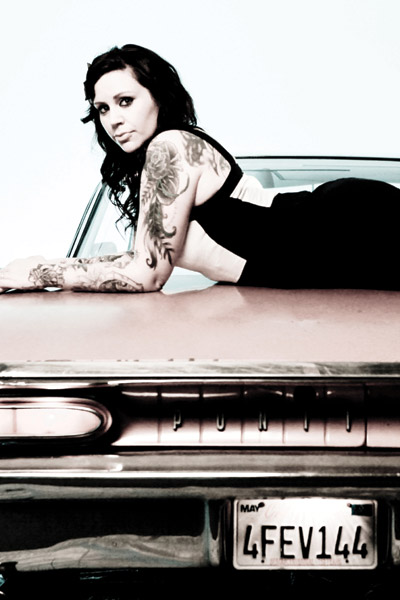 Gone are the days of rockers, bikers and pirates being the only groups to frequent tattoo parlours. We talk to three female tattoo artists making a permanent mark on their industry. Gone are the days of rockers, bikers and pirates being the only groups to frequent tattoo parlours. We talk to three female tattoo artists making a permanent mark on their industry.By Nakita Ardern Nadine Bryant– The Queen of Ink Nadine Bryant was your stereotypical British heavy metal-loving motorhead, and in her youth tattooing seemed like a logical career to move into. “In Crawley, England I took my art portfolio into a local tattoo shop, made myself available to do an apprenticeship and ended up working there for five years,” she says. In 1995 Nadine immigrated to New Zealand with her husband and son, and the following year opened Skinks Tattoo originally in Fairfield, Hamilton. Unlike a traditional street shop where you pick something off the wall, Nadine runs a custom shop where each tattoo is designed specifically for the person. Occasionally the team will have a walk-in when one of the artists has a free spot, but Nadine prefers her clients be completely sure of the decisions they make. Throughout her career Nadine has won over 100 awards including the Logan Ink Off three times. “Now I consider it a better achievement to make the client happy. There isn’t so much emphasis on competitions now thanks to the Internet and the popularity of tattoo magazines. Your work can get a lot of exposure without having to compete. Besides, art is based more on what you like, which isn’t a fair way to judge.” Nadine remembers her first large piece; a character made up of bones down a man’s wrist. The eight hour job was not only a big ask for the client, having to sit still in pain, it took an incredible amount of concentration and physical stamina for the artist. “The impression you get of tattoo artists is that we party all the time, but most of us are into working out and keeping fit to condition those core muscles.” Nadine handpicks artists who inspire her. She now employs four full-time artists, an apprentice floor manager, a part-time receptionist and occasionally welcomes guest artists into the shop. “Because it’s a custom shop we look for artists with a good variety of work. Personality wise they need to be able to get on with the others. We’re pretty humble artists so stay away from rock stars.” Nadine has done the majority of her own tattoos herself over the years and all of her employees have left their mark on her edifice. “I’m running low on room,” she quips. “Each piece was thought out and then I ask someone who I know will enjoy doing it. It’s great when someone gives you the idea, but gives you freedom to interpret it into your own style.” What is your most memorable tattooing experience? I once had a dude faint and break my nose. He was saddling an office chair while I tattooed his back. He said he was feeling faint and when I turned to put the machine down he fainted and caught me straight on the nose. I put a paper towel up it to stem the bleeding and when it stopped we packed it out and finished the tattoo! How much does a tattoo cost? A tattoo can start at $120. Anything that takes more than four hours will be charged an hourly rate of $140. Is there anything you wouldn’t do? We won’t do anything gang related and it’s a personal choice not to do anything socially unacceptable like swastikas. Placement wise, we generally won’t tattoo the face, neck or hands, but everything else is totally open for discussion. Quite often we’ll talk someone out of a design if we feel it would cause them problems or prevent future employment. We’re all judged by our appearance first off and although tattoos are widely accepted in workplaces there is a stigma attached to visible tattoos. Are females in your industry treated any differently to males? Not so much now, but it used to be difficult for females to get a start in this traditionally ‘blokey’ industry. You’ve got to be pretty tough as a chick to make it. Some people you tattoo are a little on the rough side. The whole industry is realising it’s more about the art than the attitude. What does someone need to do to become a tattoo artist? What training/education do you need? You need to do an apprenticeship ideally so you can learn safely. There are not many spots and you have to be dedicated and work hard. What benefit does participating in conventions and shows have? It’s hard to be out of the studio environment, but it’s good to keep you on your toes and get some exposure to other artists. It’s good to be thrown out of your comfort zone working on an adrenaline rush having people watch you work. Where do you see the art of tattooing 10 years from now? More people will get tattooed until it becomes so main stream it won’t be cool anymore then it will die off like the piercing industry did. Only the strong will survive. Tattoos are an expression of… Your true self. Sidebar: Tattoo lingo Scratcher: Someone untrained who tattoos from home Freehand: Refers to work that is drawn on rather than stencilled on Tickles: Refers to it hurting Old Skool: Traditional-styled tattoos New Skool: Traditional ideas made modern Sidebar: 5 pieces of advice to consider before you get a tattoo: 1. Research your artist and studio. The best way is by word of mouth. 2. Check the place is sterile and your safety is being addressed – autoclaved equipment, single use needles, clean environment. 3. Don’t hunt based on price 4. Listen to the artist’s ideas and advice 5. Care for your tattoo as instructed. Bonus tip: Winter is the best time to get full backs or sleeves done because you can cover up while it’s healing and before the big reveal when it’s finished. Aimee Clark – The Apprentice Aimee Clark regrets her first tattoo – a microscopic star sign etched into her wrist, a classic case of walking into a tattoo shop and choosing something out of the book for the sake of getting something. “I was 17, a week off my 18th birthday (because my mum made me wait and wouldn’t give consent, something I thank her for now). The fascination then turned towards the fact that I could draw anything I wanted and have it put on my body and it would be there for the rest of my life. The thrill of the permanent fascinated me and so my second tattoo was based on a drawing I did myself. The only thing that was more intriguing to me than that was the thought of me putting my own designs on other people.” Aimee was a long time customer of Nadine Bryant’s before she took up the ink pen. “I was given the opportunity to show some of my drawings and designs to the artists from the shop, and increase my presence when Nadine asked me to be the recipient of her latest project, a full Phoenix back piece that she would complete on me if I came to the Sydney convention with her. Approximately 55 hours of tattooing later we went to the 2008 PTAA (Professional Tattooing Association of Australia) Convention in Sydney and we won first place, female back piece.” Through the process the 26-year-old was offered a place on the Skinks team where she has been for the past five years. With a background in graphic design and business management Aimee completed her apprenticeship while she worked as a 2IC at Genesis Energy. She practised by tattooing fruit and vegetables to train hand control and holding the weight of the machine. Because of the stereotypes the media has created Aimee finds her job has mixed perceptions by the public depending on their age. “The elder generation raise an eyebrow like my dad, who is accepting of it now but at the beginning he didn’t think it was a reliable trade at all. At my old job people were surprised because I carried myself differently, wearing suits and things.” Are you treated any differently as a female in this industry? Understandably, sometimes there are people (younger girls who are nervous) who will specifically request to be tattooed by a female just because they feel more comfortable. It may be in a more private spot, or they may be looking for someone they can relate to. What does someone need to do to become a tattoo artist? What training/education do you need? To start you need to have a true passion for it, a creative and artistic nature as well as the ability to adapt, change and learn. You’ve probably heard this before, but take it from me it’s so much harder than it looks. I've done art, drawn and been creative all my life but when you are a tattoo artist it’s not just a 'day in the office 9 to 5’, it has to be your everything. You finish your tattoos for the day, go home and draw, draw some more, eat, then look at pictures, then draw some more. You sleep, then come to work and draw some more. You never stop thinking about designs, things you want to tattoo, drawings that need to be done and processing the images that you have to do tomorrow in your mind. If you don’t have a true passion for these things, and don’t allow them to take over your life you will get tired, burn out and this career choice will quickly seem a lot less appealing. Trying to teach yourself or learning from the Internet just isn't going to work (I know this!) and so securing an apprenticeship with a trusted, high performing shop will be the best thing you could ever do for your career. There are no industry recognised credits or certificates for this trade, but if successful you will come out with the name of learning under a respected, well-known artist within the industry. Tattoos are an expression of… The person who wears them! Tracy Brechelt – The Addict Tracy Brechelt’s Raglan tattoo studio, Designs from the Back of the Fridge, was inspired by her first studio. Located on the Raglan wharf next to the trawlers ice making machine the beautiful little room overlooking the ocean provided a calm setting for an inhospitable practice. She’s now in a studio at the end of Main Street, but the quirky business name remains. As you can expect the competition in the Raglan tattoo market is small. There is one other artist in town, Simon Te Wheoro, who takes care of the more traditional ta moko designs, and Tracy’s customers tend to be the “tattoo virgins, beautiful bodies travelling the world who know what they’re looking for”. “During the World Cup I had a lot of traffic travelling around in campervans,” Tracy says. I remember three French men came in early one evening wanting a Kiwi fern on them as a memento I suppose. There’s something about French men, they don’t mind crying in front of each other. They sobbed with their mates right there!” After the graphic art studio she was employed with went bankrupt, Tracy made the move to London. It was here that she “stupidly” got a little tattoo on her back “just to know what it felt like”. When she returned she tinkered with the idea of tattooing, but as it was a very male- dominated industry the doors were constantly shut in her face. One day she saw an ad in the Waikato Times put in by tattoo tutor, Byron Vodone, a cosmetic tattooist from Brisbane. Fourteen years later Tracy has lost count of the number of people walking around with her designs on their bodies. Initially her own body served as her practice canvas. In fact all of her tattoos, except one have been drawn by her own hand, which is amazing when you consider she faints at the sight of needles. “You have to be in the right mindset to tattoo,” she explains. “If someone is having an off day I’ll send them home and tell them to come back another time. Sometimes when you’re body is tense it’s hard to get the ink in. Your body naturally wants to reject anything that goes in.” Tracy’s goal is to develop her own unique style that people will come to her for specifically. “I love drawing flora and fauna. Nature inspires me and capturing an emotion in art. I do a lot of vanity tattoos for people who’ve lost a partner or baby. For me to be involved in that is huge. People find the process therapeutic. It also releases endorphins, that’s the addiction factor.” Tracy often has people come into her shop looking for an apprenticeship. Here is the advice she offers: - Keep drawing everyday. I do life drawing classes to keep myself fresh so I don’t get stuck in my own style. - Practice lettering especially. I get so many people who come in wanting lettering on them. - Determine what you like drawing and then step outside your comfort zone and build your repertoire. - Have good people skills. Carrying a conversation over a few hours can be hard. - And maybe learn another language. Crikey, if I knew German I’d be a much better tattooist. |
|
|

|