
|
|
Himalayan Heaven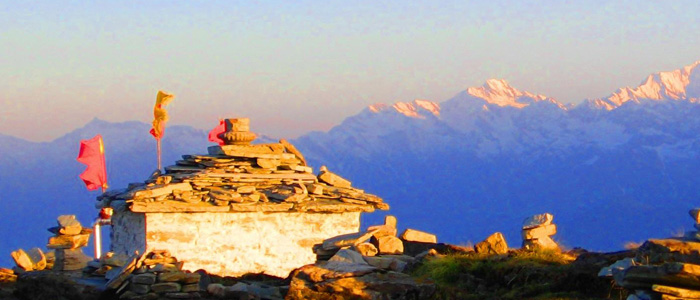 Himalayan HeavenWords: Liz LightAfter muddle, delayed flights and Terry, my brother, spending many hours sitting on a bag in a bus aisle we arrived in Gangtok, Sikkim, in the middle of a cold winter night. We didn’t intend to come here. Darjeeling was our destination but a general strike – and no public transport – forced us to change plans at the last moment and head for Sikkim. Morning light shows layers of hills in every direction but a bank of clouds are where the Himalayas should be. Gangtok, the capital of this tiny Indian state, straddles a ridge and clambers down from it. It could be the inspiration for snakes and ladders with stepped walking paths connecting roads that circle and climb at gentler angles. There are, it seems, no flat areas.We are a small family team of three; me, my brother and my 20-year-old niece, Robbie. We pick our way down steps to the Main Bazaar, a pedestrian-only road lined with shops and a central area with gardens, seats and gentle music coming from hidden speakers. People are here to saunter, to see and be seen, enjoy winter sun, to wear their best clothes and do a little shopping. Best clothes come with all sorts of ethnic influences. Tibetan women (Tibet is only 25 mountainous kilometres away) wear long tight-fitting dresses that tie in a box pleat at the back and Indian women wear salwar kamis. There is a scattering of people in jeans, monks with plum-coloured robes and orange puffer-jackets and a few smiling sadus with dreadlocks. Sikkim, with only 100,000 people, is the least populated state in India. Its people are from three groups; Buddhists, who came from Tibet, Nepalis from the west, and more recently, Indian traders and their families who moved up from the plains far below. This diversity results in terrific shopping. There is silver, lapis, and turquoise jewellery with Tibetan origins, luscious fabrics from India, a plethora of local brass and beautiful Buddhist art. Terry is soon bored with shopping so Robbie and I make a pact to return later. We walk up the hill to the park from which we intend to take the Damovar Ropeway, a vintage gondola that swoops up and down the mountain between the ridge-top park to the valley far below, stopping along the way, saving valley-dwellers the long walk up to the bazaar. Little brightly coloured flags, festooned from tree to tree, cross above the path. They are printed with prayers that the breeze carries ceaselessly to Lord Buddha. Soon the wind picks up, colossal clouds tumble in from the west and the prayer flags flap frantically. While we dally in the park, the Damovar Ropeway closes because of high wind, so as there is no rush we walk down the valley. Near the bottom a snack bar begins our love affair with momos; Tibetan dumplings. These small half-moon-shaped, steamed rice pastry packages are filled with finely sliced cabbage, onion, ginger, garlic and coriander. Momos come with a hot, spicy dipping sauce and are a taste sensation. We wolf down three plates in moments and the cook, in his mini kitchen with woks and steamers bubbling, is delighted by our, “Oh, ah, yum, yum, this-is-divine” noises. Momos, and everything else take-away, are served on small plates made of compressed leaves. Sikkim is proudly a plastic bag-free state. Do-Drul Chorten, one of many Buddhist monasteries, is on a knoll in the forest. A tall white Tibetan pagoda reaches the sky. The wall around it holds hundreds of beautifully embossed, cylindrical metal prayer wheels and devotees circle it, clockwise, spinning the wheels as they go. Each cylinder contains a tightly wound scroll printed with prayers. The belief is that spinning the wheel, this ceaseless invocation, is just as effective as praying aloud. The sound of monks chanting wafts around the pagoda. The dominant tone is deep base, like the distant rumble of thunder. This is punctuated by drums, blasts from a shrill trumpet and the ching, ching of symbols. Flowers, hundreds of flickering candles, bright prayer flags and a softly smiling Buddha make the inside of the temple visually beautiful. As we leave Do-Drul Chorten the heavens open, lightening leaps from mountain to mountain and thunder roars. Robbie and I head back to the bazaar to continue shopping, but our woollen shawls are no match for this. By the time we get back to the hotel we are wet to the skin and shivery cold. Terry wakes first, clattering around our three-bed room. I creep on to the freezing balcony and the Himalayas are glowing pearly white in an inky, star-fading dawn. Yes, this crystal morning is what we wished for and Khangchendzonga, – at 8598 metres it is the world’s third highest peak – is a giant gleaming saw-tooth between earth and sky. Robbie is not her best on freezing mornings so we loudly encourage her out of bed. Terry and I want to be higher in the mountains by the time the sun comes up. Stepped paths shortcut the roads and lead us above Gangtok and into a dusting of snow that gets deeper as we climb. The sun touches the Himalayas first and they change from pearly to pink, the valleys below are still dark with only a scattering of house lights glinting. We climb a steep path behind houses, passed iced-over puddles and snow on vegetable gardens, then pass through a cedar forest to reach Ganesh Tok, a viewing tower, Hindu temple and a Buddhist sacred place, high on a promontory. To the west the humbling immensity of the Himalayas is now bright white, and horsetails of powder snow fly off the south face of Khangchendzonga into blue sky. Below the rising sun slowly spreads over Gangtok bringing its features into detailed clarity; temples on hilltops, houses clinging to steep slopes and layers of rice fields carved carefully into the sides of steep valleys. The Himalayan Zoological Park, near Ganesh Tok, opens at 9.00 a.m. I’m not usually fond of zoos but this one is brilliant; all 32 hectares of it. Some of the enclosures are so big that it’s difficult to see animals in them, but as the sun strengthens yaks, tahr and deer come out of the forest and sit, warming in open sunny spots. The locals, and there are not many visiting the zoo this morning, have hired taxis. We are the only ones walking but we love it; the snow is so powdery it squeaks underfoot, we eat hand-fulls of it and drink in the scenery. There is, at times, a feeling of being inside a Chinese ink drawing with snow-bent bamboo in the foreground and massive mountains behind with deep, shadowy valleys lost in the depths between. It’s breakfast time at the red panda’ enclosure, but some of these fluffy faced fellows are still snuggled in their beds and won’t come out in the cold. They are adorably cute and the look of love on the keeper’s face shows that he thinks so too. Coincidently, one of the two snow leopards is called Robbie and this Robbie is also blonde and tawny. She’s perfectly camouflaged in golden grass and occasionally lifts her head, looks at us and yawns, then continues to doze in the sun. We see civet cats, mountain cats and mountain leopards all of which live in remote parts of Sikkim. Our breakfast has been snow and the almonds and dates Terry keeps in his daypack for unexpected hungry times. So, late morning, with many kilometres walked before discovering the zoo restaurant, we tuck-in to huge plates of fried noodles and steaming hot chai. This is all that’s available and it’s delicious. With a second cup of chai we sit facing the sun and if people could purr we would. The snow is melting, lumps of it slides off trees and drips sparkle on the ends of leaves. We have only been in Sikkim 36 hours, and it feels as if we have fallen into Himalayan heaven. Liz Light Essential information Plane: Singapore Airlines flies into Kolkata and Delhi. From these cities there are direct flights to Siliguri on numerous local airlines (Kingfisher, Go India, Spice). Buying tickets over the Internet is easy and efficient. Bus: Sikkim is too mountainous to have an airport. The bus takes six hours from Siliguri to Gangtok. Permits: Foreigners need permits to visit, but these are easy to obtain at Sikkim House next to the bus station in Siliguri. Best time: October to May. Winter, in January and February, is cold but beautiful. June to September is monsoon season and mountain roads are often closed. |
|
|

|