
|
|
Bridging the Gap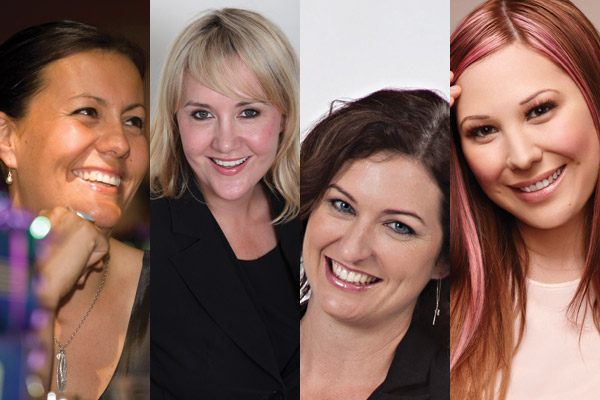 From the veterans to the ‘millennials’ the generation gap in the workplace is continually increasing as workers are retiring later and seeking employment earlier. As the four distinct generations – the Veterans or ‘Silent Generation’ (people born before 1946), the Baby Boomers (born between 1946-1959), Gen X (born between 1960-1979) and Gen Y (born between 1980-2007) work together, individuals often collide; individuals with different values, different ideas, different ways of getting things done and different ways of communicating in the workplace. Her Magazine speaks to eight successful businesswomen across the four generations about how 50+ years can change a range of business facets including the gender gap, social networking and New Zealand’s standing on the global business stage. Phoenix Renata Founder, Phoenix Cosmetics Generation Y Q: How do you think women in business are perceived by their male counterparts in 2012 –as equals, or lacking in competence at the higher levels? Most of the jobs in higher levels are taken by men, if you look overall at the statistics. Therefore men must think women are incompetent because they still hold the majority of higher level and high income bracket jobs in 2012. I work in a mainly female-dominated industry so think myself lucky that I don’t have to deal with that type of sexism. Q: Generally speaking what do you think distinguishes women's business style from men’s? I think women look at things from a broader perspective, not just black and white. Women don’t just see figures, they see people. We look at what motivates our clients and what evokes our staff to perform better. Also time management. Women are much better at fitting more in, making the most of time constraints. Men often have a laid-back approach whereas women get the job done before the men have planned for it! Men often waste time with long-winded meetings instead of tackling issues head on in a swift and timely manner. Q: What do you think is a woman's most valuable asset in business? Strength. Business women are strong, determined, motivated and focused. Women are born to overcome difficulties, both physically and emotionally. It’s in our blood, we have the ability to give birth! This makes us strong, yet also able to give a softer nurturing side, both of which help us immensely when in business. Q: If you were to prioritise the top five activities essential to building a successful business over time, what would they be, with no.1 as the most essential business activity to get right: Goal Setting – A goal is a dream that has a time line. Building a brand. Planning, marketing and developing. Recruiting a brilliant team. Never underestimate the importance of recruitment, and hiring the right people for the role. Management of your systems, constant development and overseeing that your systems run efficiently. Keeping your customers happy. Finding out what your customer wants, and giving it to them! Q: Do you think customers have changed now from 5-10 years ago, and how? What are their expectations now? Yes, ours have. Technology has changed customer expectations. Information is so freely available and so accessible, and customers are savvy and knowledgeable about products and manufacturing. As customers are socially and environmentally conscious we need to be as well in order to earn custom from the client. We often have to mimic trends in our products. For example, the current health trend, where customers are wanting mineral- based, fragrance free and natural products, means we tailor our goods to this need. Q: What do you perceive as your marketplace: local, national or global? Global. Our competitors are global, and our product line is saleable to anyone anywhere in the world. Q: Do you use Social Media? Yes, on a daily basis – every avenue that is available to the company I try. Q: How important is it as a tool for your business? Extremely important. It is imperative. We use it for research, we use it to connect with people. We use social media as a leading marketing device. Social media is what people use to communicate, it is how we reach clientele in 2012. Q: What are its weaknesses? Customer complaints or negative comments can go viral, which often means a business’ weaknesses can be exposed on a large scale. Q: How prepared do you think New Zealand businesses are to take their place on a global stage? We have been doing it successfully for years. The evidence is clear. New Zealand has been extending its business to overseas markets for a long time. We are not the type of culture that holds back – we take opportunities as they come up. We are ready, prepared and will succeed. Q: How well equipped are New Zealand businesses to integrate an increasingly multi-cultural and aging workforce? I think business’s have embraced having different cultures and ages as workers. We are a multi-cultural society. We have changed for the better when it comes to cultural diversity. Our customers are multi-cultural, and they want to be able to relate to a sales assistant on a common ground. To have a multi-cultural and aging workforce is an asset to business, and I don’t think business’ have found it hard to integrate into their workforce. Q: What examples of business innovation in New Zealand have inspired you? The apparel industry always come up with incredibly innovative ways to use natural resources that we already have, as opposed to using synthetic fabric, and the world admires our innovative approach. We use natural resources to make clothing, for example Merino, hemp and possum fur. Q: Which women business owners or managers have you watched with interest? Annah Stretton – she is my constant inspiration in business. This woman moves fast, sets what most would call ‘impossible’ goals and achieves them. She constantly looks for ways to improve her business, increase sales and develop her brand. I love the way that Natalie Chan has marketed and branded her business, and I have watched her with keen interest. Q: What qualifications do you hold? As Donald Trump would say, I am street smart. My business qualifications are short business course certificates. However, my colourful experiences in life have more than prepared me for a life in business. I am a Makeup Artist, so of course I have a Makeup Diploma. Q: What is the most valuable training you have had in your career? My passion is makeup artistry so I would have to say the most valuable training I have ever had would be one-on-one makeup development I undertook with my makeup mentor. Nikki Kaye National MP for Auckland Central Generation Y Q: How do you think women in business are perceived by their male counterparts in 2012? There are sufficient women operating in senior levels of business to generate respect amongst most businessmen today, but there are still some entrenched and outdated attitudes in pockets. I believe these aren’t necessarily a reflection of people’s ages, but are more a reflection of those individuals. Certainly people like Joan Withers, Roseanne Meo, Janine Smith, Julie Christie, Sharon Hunter and Jan Dawson have done a huge amount to demonstrate the competence of so many women in business. Q: Generally speaking what do you think distinguishes women's business style from men’s? Obviously you have to be careful when generalising, but I think many women are very intuitive and probably put a greater emphasis on developing personal relationships to underpin their business relationships. Q: What do you think is a women's most valuable asset in business? Quite a lot of women are good at multi-tasking, and this means they can keep an eye on a number of different issues at the same time. Q: If you were to prioritise the top five activities essential to building a successful business over time, what would they be, with no.1 as the most essential business activity to get right: From my experience the following is not a unique list to business, but could also apply to community and political leaders: 1. Being customer driven. 2. Good understanding of the business and business fundamentals. 3. Investment in good people who have confidence in the business. 4. Good managers who treat people well. 5. The right marketing and communications mix for that particular business. Q: Do you think customers have changed now from 5-10 years ago, and how? What are their expectations now? Technological advances mean, inevitably, everyone wants a response and an action much quicker than they expected in the past. This can put pressure on a business to be constantly vigilant to the requests of customers and often means that business has to be a 24/7 operation. Q: What do you perceive as your marketplace: local, national or global? As a Member of Parliament with constituency obligations, I have many local people who I need to communicate with and respond to. However, the nature of politics means you have to be on top of national issues, and depending on your specific portfolio or interests global issues as well. Q: Do you use Social Media? Yes Q: How important is it as a tool for your business? I think social media is a very important tool for me. Many of my constituents now choose to contact me via social media for a variety of reasons – everything from local issues to policy queries. I am very active on Facebook and use both that and my website to ensure that my constituents have as much information as possible about what I’m doing. Q: What are its weaknesses? I cannot afford to be exclusively social media-driven in my communication with constituents and people who are interested in what I am doing. Many of them choose to communicate with me by writing letters as well as emails, and making phone calls. Q: How prepared do you think New Zealand businesses are to take their place on a global stage? There are some outstanding examples of New Zealand businesses taking on the world. One of my own constituents in Auckland Central has built a worldwide transport business that has been one of the best performing in the country in the last couple of years, largely on the back of global expansion. I think those that have the courage and the willingness to work hard have proven over and over again that New Zealand frequently punches above its weight in global markets, and we need to recognise that and encourage others to follow that trend. Q: How well equipped are New Zealand businesses to integrate an increasingly multi-cultural and aging workforce? Clearly people are retiring later and the flexibility that our labour markets now gives businesses means that options such as part-time work and working from home using new technology, can be very effective tools for business. From a cultural perspective, there are emerging opportunities with our free trade agenda particularly with its focus in Asia. I see our multicultural workforce as a strength in years to come, as some of these people are the expats who can help us better engage with these markets. Q: What examples of business innovation in New Zealand have inspired you? As a science graduate I am always very interested in the achievements of those companies that have used their knowledge to establish a beachhead in global markets. It is difficult to mention a couple without offending those I don’t mention, but places like the Icehouse and some of the work that our universities are doing have played a great part in helping innovative businesses to achieve global success. Q: Which women business owners or managers have you watched with interest? I really admire Joan Withers. She left school to work full-time at the age of 16, and has had such a successful and varied career in a range of industries. Q: What qualifications do you hold? I have a Bachelor of Science in Genetics and a Bachelor of Laws from Otago University. Q: What is the most valuable training you have had in your career? As a result of the fact that my family were involved in a law practice, I had the opportunity, from a relatively young age, to meet people of varying social, cultural and economic backgrounds. It was great to be able to observe how to help people with compassion and dignity on a real range of issues, be they personal or commercial. Rachel Taulelei Founder, Yellow Brick Road Generation X Q: How do you think women in business are perceived by their male counterparts in 2012? As equals, or lacking in competence at the higher levels? I think women are perceived as equals by men in business. Q: Generally speaking what do you think distinguishes women's business style from men’s? I don’t think you can generalise by sex. I think people differ from each other in a myriad of ways. We each have strengths and weaknesses that we have developed through upbringing, schooling, life experiences, and the environment(s) in which we exist and operate. Q: What do you think is a women's most valuable asset in business? I think any person’s most valuable asset, regardless of sex, is their energy. Q: If you were to prioritise the top five activities essential to building a successful business over time, what would they be, with no.1 as the most essential business activity to get right: Trust your instincts. Aspire to be the very best at what you do. Surround yourself with smart people. Maintain an unfettered belief in your ability to succeed. Learn through reading, experience and most importantly, networking. Q: Do you think customers have changed now from 5-10 years ago, and how? What are their expectations now? My customers have absolutely changed over the last five years. Their expectations are now higher as a result of the work we’ve undertaken. Where previously they accepted the status quo in seafood, now they’re looking for more. Greater traceability, more responsible forms of catching, new species, and value in seafood’s provenance. Q: What do you perceive as your marketplace: local, national or global? My priority is the national market, and then international. Q: Do you use Social Media? I do. Q: What are its weaknesses? I’m not sure the weakness is in the tools – more often than not it’s the user with the weaknesses. For me social media is about listening rather than telling. When you enter the social media world to simply tell your story you’ll probably get it wrong. Social media plays to people’s innate desire to belong, to be part of a community of like-minded people. If you listen to what people are saying, what they’re feeling, and what they’re looking for, through your business you can more effectively satisfy those needs and wants. Even if you do not participate in social media you have to understand how it operates as it is now undeniably part of everyday business. Q: How prepared do you think New Zealand businesses are to take their place on a global stage? Some businesses are eminently prepared and active in this space. Some of our New Zealand businesses are world leaders. Many however are not, nor will they ever be. It’s the 80:20 rule, with the vast majority of our exports placed into the global market by just a handful of companies. This isn’t a bad thing though – exporting isn’t the panacea for all companies. The domestic market can be lucrative, and exploiting it to its full capacity is smart. It’s a fairly forgiving market, the cost of doing business is less than in exporting, and trumping the domestic market, or not, can teach you a host of valuable lessons to take into exporting. Q: How well equipped are New Zealand businesses to integrate an increasingly multi-cultural and aging workforce? Some are more than ready and are doing so as we speak. But it’s a matter of our needing growth and development across the board. We have an enormous base of SMEs in New Zealand and it’s hard for those companies to manage these kinds of challenges. But they do, and often times it makes for a much better workforce and more robust business. Q: What examples of business innovation in New Zealand have inspired you? I’m inspired by creativity and smart marketing. Various campaigns and products have inspired me, as have specific people. Among others Assignment, AirNZ, Pack Investment Group, Positively Wellington Tourism, Chefs Sean Marshall and Martin Bosley, Nigel Greening, Sarah Robb O’Hagan, and the Family of Twelve. I really enjoy being around people with great acumen, who aspire to fly higher and faster, and who don’t need validation by others to know they’re good at what they do. I’m also inspired by intergenerational Maori business – it’s the ultimate in future investment. Q: Which women business owners or managers have you watched with interest? Jenny Shipley, Fran Wilde, Sarah Robb O’Hagan (Gatorade North America), Sarah Reo (Cultureflow), Cath Cordwell (Zest Food Tours), Judith Tabron (Soul Bar & Bistro), Annabel Langbein (Chef, Author, Television Presenter). Q: What qualifications do you hold? LLB, Motherhood. Q: What is the most valuable training you have had in your career? Eight years as Trade Commissioner in the United States for New Zealand Trade and Enterprise. Janene Freer Founder, Flossie Media Group Generation X Q: How do you think women in business are perceived by their male counterparts in 2012? As equals, or lacking in competence at the higher levels? Personally I've never encountered any type of sexism in the workplace. I've found men to be very respectful for what I do professionally and I am frequently asked for advice, support and mentorship. I also find asking others for help and support is met with a genuine response that is not condescending or otherwise. I think in 2012 if any issues happen in the workplace they come from personality or management differences. Q: Generally speaking what do you think distinguishes women's business style from men’s? Very generally – I don't really like to make judgements based on gender (and in my experience there's nothing homogenous). But speaking simply from life experience (not necessarily business) women are more well rounded but definitely more emotional. Men tend to lack compassion and are more ‘single focused’ – not particularly good at multi tasking. Men don't second guess themselves as much as women. And typically women think of the other benefits of business and are less commercially focused. Q: What do you think is a women's most valuable asset in business? Again, I'd prefer to speak from what I feel my own best asset is as opposed to just a 'female' perspective (I'm not sure I'd be in a position to state that other women are like me!). My most valuable asset is my ability to just get on with it and adapt. Things move, life changes, hurdles appear – but my adaptability means that I am able to cope with change. My ability to just get on with it means that I don't spend valuable time dwelling, second guessing or worrying over non-consequential aspects – and can instead focus on the important elements. Q: If you were to prioritise the top five activities essential to building a successful business over time, what would they be, with no.1 as the most essential business activity to get right: 1) Research – know what the ‘pain’ is in the market you're looking to establish yourself in. 2) Strategy – how you can fix the ‘pain’. 3) Opportunity planning – knowing where you're trying to go and how you're going to get there. 4) Team building – people you can trust to allow you to keep your focus on strategy and opportunity planning. 5) Client focus – no who your market is and how you can make their life easier. Q: Do you think customers have changed now from 5-10 years ago, and how? What are their expectations now? With budgets continuously being cut, all managers are looking to be more efficient and expect more from their suppliers. Our goal is to make them look good – so how do we do that? How do we make their life easier? It's a bit of a self-fulfilling prophecy – we tend to create large expectations that the clients can rely on us to meet. Q: What do you perceive as your marketplace: local, national or global? For the nzgirl business the market is national – but interestingly enough it feeds my other businesses, which are globally focused. Flossie.com is Asia-bound in late 2012. Q: Do you use Social Media? All day, every day. Even as I type this! I multi-task well, which makes social media much easier to manage and comprehend. Q: How important is it as a tool for your business? Extremely. Think of it this way. The average New Zealander has 130 Facebook friends (and within my audience of 25-35-year-old women the representation on Facebook is over 90%). Every time they talk about you it's to the 'power of 130'. Within my nzgirl customer base the average number of Facebook friends is 300. Q: What are its weaknesses? It's constant, not just a switch on/off when it suits you. It's a constant conversation that requires you to be interested in what you're saying and what is being said. Q: How prepared do you think New Zealand businesses are to take their place on a global stage? I think most want to but don't know how to. We certainly are scared of what the 'global stage' means – the comfort of home can be appealing. Preparedness is the answer though – the more market research you can do the less scary it will be. New Zealand is amazingly advanced and it's not until you step offshore that you realise we do have what it takes (and then some) to make it work. Q: How well equipped are New Zealand businesses to integrate an increasingly multi-cultural and aging workforce? Most business owners I know don't discriminate on gender, race or age. We're all looking for the same thing – hard working people willing to go the extra mile. Unfortunately super-stars are a little thin on the ground – we do have a tendency in this country to have people with hands out looking for the easy options. I've been very fortunate and met some incredibly hard working people who recognise and realise that life is a simple mathematical equation. What you put in, you get out. Q: What examples of business innovation in New Zealand have inspired you? Anyone who has been gutsy to just say 'Hey, I get it's going to be hard, but I know this is going to work because ...'. Rod Drury from Xero is a great example of this. Stuff the notion of a market being led and saturated by one stalwart who hasn't innovated but nonetheless dominated for donkeys years – he saw that innovation could transform an entire industry and became relentless in his pursuit to achieve a total market disruption. Inspiring stuff. Q: Which women business owners or managers have you watched with interest? I'm fortunate enough to meet many business women daily who I admire both here and overseas. Katie May from Kidspot has to be one of the hardest working, switched on people I've ever met and her recent company sale (netting around $30m) was just for the commitment to strategy she instilled from day dot. Q: What qualifications do you hold? Not a heck of a lot. Pitmans Typing Examination 1993? Q: What is the most valuable training you have had in your career? My training has been very hands-on. Through my investors (Movac, Lloyd Morrison) I have been taught valuable life and business lessons. I now have a personal panel that I refer to for guidance. The people in my life have been my trainers – from family to friends to colleagues. Jenny Shipley Former Prime Minister of New Zealand Baby Boomers Q: How do you think women in business are perceived by their male counterparts in 2012? Males like to think they view their female colleagues as equals. Partly because they need to and partly because they now understand that in order to be successful themselves they need their female colleagues alongside them. Having said that, from time to time sexism is still a reality in the workplace, although it manifests itself in subtle ways. Q: Generally speaking what do you think distinguishes women's business style from men’s? Women view risk and opportunity more broadly than men, leading to outstanding performance if you have men and women at the board table, or the senior management setting. Overall performance is more sustainable and risk profiling is more manageable if you have female and male aptitude and attitude being applied. Q: What do you think is a women's most valuable asset in business? Women’s most valuable assets in business are themselves. As they bring their scholarship, their experience, their entrepreneurship and their passion for business growth, which secures a successful economy. The overall momentum of the contribution that women are bringing to economies around the world is becoming blatantly obvious. This trend will only extend as women have more control over their lives in every respect, and increasingly control over significant disposable income, both in their own right and within households. Q: If you were to prioritise the top five activities essential to building a successful business over time, what would they be, with no.1 as the most essential business activity to get right: Have a clarity of purpose in whatever role you find yourself in. You define the role, don’t allow the role to define you. Understand that qualifications are only half the deal, attitude and application is at least 50% determinant in how people succeed. Look up. Often women wait until they feel they’re fully qualified before they apply for the next-step job. In my experience if women applied for the next step when they have the same level of competence as their male colleagues we would see far more women in senior roles. As women gain confidence in themselves and support each other as they ascend into successful positions this problem will be overcome. Love what you do! Q: Do you think customers have changed now from 5-10 years ago, and how? What are their expectations now? Five or 10 years ago sellers could broadcast at consumers and expect to get resonance. Today consumers expect to be engaged with and expect products to be designed in a way that resonates with their aspirations and needs rather than the producers’. Smart companies that understand the power of the customer are the companies that excel in the market today. The global market place is the only market place New Zealand should be aware of, even if you are selling locally. We have to meet world standards even if we are delivering into the local market because New Zealanders can access so much online. Even if we’re not competing at the retail level for goods or services, people can access those in a global context. So global is the only option. Q: Do you use Social Media? Yes, it is an increasingly useful tool. Its weaknesses are that it connects people randomly into unstructured conversations. The challenge is to use social media to engage people in a wider range of important conversations and dialogue, some of which will be voluntary, some of which will be much more important to the community and our nation. New Zealand businesses vary in their ability to participate in the global stage, we’re outstanding producers of quality goods and we are not necessarily brilliant at adding design features that allow base goods to leverage to the maximum of value. Q: What is the most valuable training you have had in your career? Taking every opportunity that comes along, and hunting down those that I needed to experience in order to have the confidence to take the next step. How New Zealand businesses are just beginning to understand that our multicultural and aging workforce is both a benefit and a risk. However, smart companies selling goods and services that are taking advantage of these features are actually doing increasingly well. Consumers have the satisfaction of relating to well qualified and well trained people, and to their sphere and influence. Suzie Moncrieff Founder, World of Wearable Arts Baby Boomer Q: How do you think women in business are perceived by their male counterparts in 2012? As equals, or lacking in competence at the higher levels? Speaking from my own experience I think things have certainly changed in the last decade, and in general the world has little tolerance for discrimination of any kind whether it’s targeted at a person’s sex or colour or anything else. I have always had a strong belief in myself and my vision for WOW, so I paid little attention to people (male and female) who attempted to undermine me. Q: Generally speaking what do you think distinguishes women's business style from men’s? As woman we are often very good at multi-tasking and we tend to be intuitive and natural communicators, not that men don’t have those attributes, but often I have found women in business tend to rely more strongly on those attributes. WOW has been successful because we have fostered a very inclusive business style – we are very much a family. I believe that no one person has all the best ideas, and I am very interested in ensuring every member of our team achieves at their highest potential. Q: What do you think is a women's most valuable asset in business? I think it’s too hard to generalise women this way, we are such a diverse bunch. For me personally having a strong sense of old-fashioned values has served me well in business over the years. I have always been taught to value others and treat them as I would be liked to be treated. I understand the principle of hard work and I am not afraid to roll up my sleeves and get stuck in. Q: If you were to prioritise the top five activities essential to building a successful business over time, what would they be, with no.1 as the most essential business activity to get right: Believe in and hold on to your dream. It will be tested. See setbacks and obstacles as stepping stones and chances to learn. Surround yourself with like-minded people (the best and most creative), challenge and nurture them. Get the numbers right, being financially literate is very important. Get good advice and use it to plan. Q: Do you think customers have changed now from 5-10 years ago, and how? What are their expectations now? I believe they have become more discerning, their expectations are higher and they are looking for a total experience, where there is more of a chance for two-way communication. We have been very lucky that our customers have become very loyal advocates over the years, and we protect the WOW brand equity that we have. We look to extend the customer experience past the show into a 12-month experience, and part of that has included the development of a touring exhibition OFF THE WALL and our museum in Nelson. We are engaging with our customers via social media and this is now part of our mainstream marketing activities. Q: What do you perceive as your marketplace: local, national or global? I had always seen WOW as an international show, even back at the very beginning, so it is an exciting time for me to see the show recently travel to Hong Kong to be a part of the Hong Kong Arts Festival, taking that first step. Nearly a third of entries every year come from international designers. I truly believe anything is possible with WOW and I would like to see it as a global awards show. Q: Do you use Social Media? Yes, we have had a social media strategy for a couple of years. We have taken a pragmatic approach and have started very small. Social media is becoming more main stream and it’s important that we continue to embrace different mediums for communication. Our designers in particular are a very international group of people and the use of forums, Facebook and twitter have been a chance for them, in particular, to engage with each other and learn from each other. Q: How important is it as a tool for your business? As we learn more and develop our online channels it will become more important for the generation of sales, engaging with audiences and for general marketing. We have a very defined demographic for our audience and as they embrace social media we will develop our marketing campaigns to focus more in this area. We have used social media for immediacy, particularly for announcing our results. Q: What are its weaknesses? It changes very quickly; staying current and up-to-date with new developments can be time consuming. It needs dedication and time, in a fast moving company like WOW this isn’t always easy. Q: How prepared do you think New Zealand businesses are to take their place on a global stage? As a far-flung country New Zealand has always had to look outside of its own land for opportunities to grow. I think that the types of products that we look to market on the world stage will change from the traditional commodities to less tangible products like IP, technology and even arts related events like WOW. This change will come with its own challenges for businesses, but I certainly think that New Zealanders are creative problem- solvers by nature and we tend to be world leaders in niche fields like arts, film and other creative industries. Q: How well equipped are New Zealand businesses to integrate an increasingly multi-cultural and aging workforce? I can’t speak for all businesses but I can say WOW is an example of a business that is a cultural melting pot, with people involved ranging in age from children to senior citizens. WOW by nature is not mono-cultural and is non-elitist and there are very few barriers to becoming involved. I am not sure if this makes us a head of our time or not, but it does show that it can be accomplished. Q: What examples of business innovation in New Zealand have inspired you? Innovation is often a key dynamic in many successful New Zealand businesses. I have always been inspired by Sir Richard Taylor and the Weta Workshop story. Richard started his business from the kitchen table in the most humble of beginnings. He stayed true to his dream and vision and now is a world leader in special effects innovation. It’s very hard to be a leader in an industry. It’s hard to be a pioneer and to write a blue print for something never seen or done before. He is truly inspirational. Q: Which women business owners or managers have you watched with interest? There are many, but the sister team of Catherine de Groot and Sarah Gibbs, who founded and started the Trilogy Skincare Range, I believe will be two of the next generation of great business people. They are in a very competitive industry and have succeeded by producing something different and very special. They demonstrate good business acumen and an unshakeable passion. Q: What qualifications do you hold? I actually don’t hold any formal qualifications unless you count School Cert, but I have definitely attended the University of Life. Twenty four years of working on WOW has been an education in itself. Q: What is the most valuable training you have had in your career? It’s been a very practical hands-on training for me. None of it was undertaken in a class room, all of it was informal and all of it was valuable. I have been privileged to have worked with some truly remarkable and creative people over the years and they have all been able to share their wisdom with me. Wendy Pye Founder, Wendy Pye Publishing The Silent Generation Q: How do you think women in business are perceived by their male counterparts in 2012? Lacking in competence at the higher levels. Q: Generally speaking what do you think distinguishes women's business style from men’s? Personal, hard working, no nonsense and more practical. Q: What do you think is a women's most valuable asset in business? Focus on what she knows best. Q: What do you perceive as your marketplace: local, national or global? Global Q: Do you use Social Media? No Q: What are its weaknesses? Private focus Q: Which women business owners or managers have you watched with interest? World leaders internationally, e.g. Hillary Clinton. Q: What qualifications do you hold? World skills from the real work of putting you own money on the line and not being part of using other people’s money. Q: What is the most valuable training you have had in your career? Learning from experience and making mistakes. Colyn Devereux-Kay Founder of Les Floralies and co-founder of EGG Maternity The Silent Generation Q: How do you think women in business are perceived by their male counterparts in 2012? Today women in business are seen as equals to males. This has developed over the past 10 years, with a number of women heading up large companies. Q: Generally speaking what do you think distinguishes women's business style from men’s? Women on the whole are more patient and empathetic, which gives them the ability to connect with their staff and the business they are in on many different levels. Q: What do you think is a women's most valuable asset in business? With women juggling busy lives we are able to cope with more. Q: If you were to prioritise the top five activities essential to building a successful business over time, what would they be, with no.1 as the most essential business activity to get right: Plan, plan, PLAN! It’s very important to put the right tracks in place to ‘run on’! Make “Big Plans”, you can always come down a bit, but make small plans and it’s hard to “go up”! With expansion make sure you have secured financial backing. Have a mentor, or base your successful business on how they moulded their business – read success stories. Enjoy what you are doing. If it becomes stale re-address your goals and how you can make it successful and pleasurable, i.e., plan business trips to exciting/interesting places! Have a dream. With a dream anything is possible Q: Do you think customers have changed now from 5-10 years ago, and how? What are their expectations now? With ‘fast fashion’ over the past 10 years, people expect more for their money. Q: What do you perceive as your marketplace: local, national or global? We are definitely local as we have had great support from the New Zealand market over the past 12 years, however our growth has also been Global, and with “E commerce” this has made it even stronger. Q: Do you use Social Media? Facebook for us has been a fantastic way to grow the business when advertising budgets were limited. Working in with other companies through ‘posts’ and ‘blogs’ has also been very successful. Q: How important is it as a tool for your business? It helps us to interact with the ‘rest of the world’. Q: What are its weaknesses? I don’t see any weaknesses, apart from getting bombarded by emails. Q: How prepared do you think New Zealand businesses are to take their place on a global stage? I believe New Zealand businesses are successful on the global stage with great support from the Chamber of Commerce and Trade & Enterprise. Q: How well equipped are New Zealand businesses to integrate an increasingly multi-cultural and aging workforce? I believe we are ‘well equipped’ as we see the benefits of different cultures and the knowledge that comes with age. Q: What examples of business innovation in New Zealand have inspired you? Icebreaker is a great success story and has led the way in outdoor pursuits clothing. We also have very successful designers, such as Karen Walker whose designs are always ‘leading edge’! Q: Which women business owners or managers have you watched with interest? Trelisse Cooper has been a great inspiration through her ability to be involved in so many different areas … and always doing it so well! Q: What qualifications do you hold? Many years ago I did a ‘business course’. Q: What is the most valuable training you have had in your career? I learnt a lot from my mother, who was a businesswoman in the apparel industry years ago. It obviously runs in the family with three generations in this industry. |
|
|

|