
|
|
Sweet As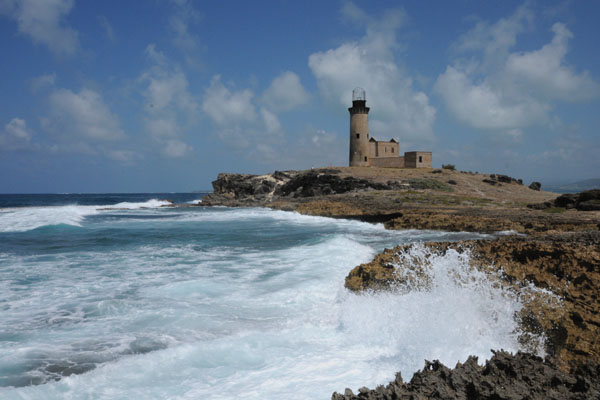 Mauritius is a slow-paced Indian Ocean pearl with perfect beaches, loads of sunshine and a unique culture. Liz Light stays in a small town and watches the world go by. By Liz Light Valley views, waterfalls, an historic British battle tower, a vintage salt-making system and tea processing; Sam drives our hire car from place to place and thing to thing. At the end of the day I feel crotchety and exhausted. Enough sightseeing! We decide to slow down, relinquish the car and stay put in Mahebourg for a few days. Mahebourg is not Mauritius’ biggest town, nor is it on the sunny north coast where luxurious tourist resorts are strung along white coral beaches. But it’s big enough to be interesting (population 16,000) and small enough to be able to walk around; we soon love its easygoing lack of pretension. It turns out that our stay here is also busy, but in a relaxed way. I learn to appreciate, if not like, the little dogs that live across the road from Coco Villa, which start yapping at 5.30 every morning. This is the time the sun rises and fishermen load their gear into their boats, pole out over the shallows and set sail for the gap in the reef that leads to the vast fish-filled Indian Ocean. Coco Villa, on the waterfront, has kitsch décor (pink chiffon curtains tied bouffant style with glittering butterfly clips) and a water-torture drip in the toilet cistern that when finally full packs a hefty flush, but it’s not expensive and the family who own it are delightful. I love that our room’s balcony is perfectly positioned to view the next-door cove and the sea beyond and I get up with the dogs to observe morning activities. Fishermen arrive at their boats on bicycles, baskets of gear slung either side of the handlebars, and some have an outboard motor balanced on one shoulder. Two or three men per boat methodically set the pirogue-style sail, catch the wind and zoom into the sunrise. I nurse a cup of tea and soon, when the sun is low and bright and most of the boats in the cove have gone, people come down to the lagoon and wade knee deep, looking for molluscs. Others, with their fishing gear in brightly woven baskets, settle in to fish off either end of the rocky breakwater. At 8.00 a.m. it’s breakfast time; crusty French bread, pineapple marmalade, tea spiced with freshly crushed cloves and a plate of fruit – papaya, pineapple and small sweet bananas. Sam and I walk to the museum on the edge of town, along lanes not designed for cars. There are no footpaths, houses open straight on to the lanes, children walk to school, granddads escort their little tots, men ride old bicycles to work and yellow dogs curl up in shady places. Cars making their way down these small streets defer to all of this. Creole cottages with rusty roofs sit in pin-neat yards and newer, larger concrete stuccoed houses, two storeys high with washing drying on the flat roof have small gardens dense with tropical foliage. Pink, orange and purple bougainvillea cascades off balconies and over walls. Huge shading mango and breadfruit trees have staked their claim to space and the lane waists-in around them. (suggest alter ‘waists-in’ as awkward – bad construction, etc!) The museum, a mansion that belonged to the Robillard family for centuries, traces Mauritius’ mix of Dutch, French and British influence as its colonial masters changed. Much is made of the sea battle between the British and French in 1810 out in the bay beyond Mahebourg, and it was to this house that the injured commanders of both fleets were taken for treatment. The French won this battle but lost the war. Later that year, after Napoleon’s defeat, Mauritius was taken from France and became a British colony. We amble down Royal Road and visit Notre Dame de Anges to pay our respects to Father Laval. The honey-coloured Catholic Church built in 1849, is cool, airy and quiet. Its size and simplicity give it a serene ambience – the tall roof is supported by handsome wooden framework and the pews are hewn dark wood. In the apse Mary, robed in white and blue, is centre stage with a supporting crew of angels and cherubs. A simple, austere, image of Christ on the cross stands above her in the shadows of the ceiling. A life-size statue of Father Laval, Mauritius’s own Saint, is in one corner and people pop in to pray to him. Father Laval studied medicine in Paris and worked as a doctor until he found God and became a priest. He arrived in Mauritius in 1841 and spent the last 23 years of his life here living with poor, former slaves, working in agriculture, health and education. He apparently converted 67,000 people to Christianity and many miracle cures are attributed to him. The cemetery is pride of place on a hill to the north of town. I’m partial to cemeteries; their serenity, the wisdom of the ages and the ambience of abiding love – and this cemetery is exquisite. There is a myriad of sturdy white crosses marking memories of lives. Many are decorated with wreaths of porcelain roses, flowers in jars and photos of lost loved ones. Christ presides from the largest cross on a knoll in the middle of the cemetery while fishing boats on the aqua lagoon beyond skip across the wind. (boats skipping across the wind – it’s a hard image to picture – suggest alter) The market, the buzzing heart of town, has bright handicrafts stalls with an impressive range of rainbow-hued, hand-woven baskets and spice stalls where one can buy bundles of vanilla and kilos of nutmeg, mace or cinnamon for next to nothing. The fruit and vegetable section smells of ripe pineapples and sells everything imaginable from the Garden of Eden except apples. I fondle fat aubergine, marvel at the size of the bright orange pumpkins and admire the mountains of capsicum and chilli peppers. Mauritius is in the tropics so tropical fruit and veg are abundant, and in the cooler mountain areas vegetables such as cabbages, beetroot, cauliflower and carrots thrive. This is a vegetarian’s heaven. The Mahebourg waterfront is busy; boys ride bicycles, courting couples chat and make promises with eyes and smiles, families stroll in the late afternoon and fishing boats with bright sails scurry home over a picture-blue lagoon. The lagoon and distant islands on the reef are beckoning. We go to the cove where the fishing boats are and negotiate a day trip with Tony, a fisherman who has spruced up his old wooden boat so he can take tourists out on the lagoon. The first stop is Ile aux Phare, the place the Dutch landed when they discovered Mauritius in 1598. The lighthouse was built much later, in 1864, to guide ships through the gap in the otherwise treacherous reef. Little fishing boats, with raked-back sails, leave the safety of the lagoon and head out to the deep, dark, blue ocean. Waves thunder on to the rocks, and while standing below the lighthouse, on a cliff edge, we see a white-tailed Tropicbird pirouetting on the wind. This large black and white bird is rare on the mainland now. Ile de la Passe, on the other side of this opening in the reef, had British barracks with soldiers guarding the strategically important gap. We stroll around the ruins of the men’s accommodation and an old chapel. I read early graffiti carved into stone and know that M. McGregor was here in 1853 and E. Doherty in 1845. On the way back to Mahebourg we stop at a place where a deep, dark channel rises steeply to become shallow aqua water. Sam and I jump overboard and snorkel in this real-live tropical aquarium; a couple of bumbling humans among hundreds of pretty little fish. Tony free dives and cleans the bottom of his boat. Hundreds more fish gather gleaning the vegetable feast that he scrubs off. (not quite quite sure what this means?? Suggest rewrite) They are tiger striped, shiny silver and iridescent blue. The flashing fish, bright bubbles, shimmering dapples of the sun on the sea above and Tony swimming around as effortlessly as a merman (not sure if there is a thing called a merman!!) make an unforgettable scene. It’s a magic moment, one of many in Mahebourg, and though we fly out the next day we have no regrets about spending time in this small, sweet town. Liz Light Lizlight.co.nz All photographs supplied by Liz Light Essential informationGetting there: Air Mauritius flies directly from Melbourne to Mauritius each week and has onward flights to London, Paris and Africa. Mauritius is a divine stopover. www.airmauritius.comGetting around: Hire a car at the airport. People drive on the left-hand side of the road. Stay in Mahebourg: Coco Villa is cheap, clean and has great views. Cocovilla30@hotmail.com www.mahecocovilla.net Auberge Aquarella, next door, is more stylish but also more expensive. aquarellamu@email.com Stay on Mauritius’ north side: LUX* Resorts has seven five-star beachside properties in Mauritius. Legends and Beau Rivage are highly recommended. www.luxislandresorts.com More information: mauritiustourism.org Best time: May to October; the weather is cooler and comfortable. |
|
|

|