Power Profile > Saving ourselves


|

|

|
|
|
|
Saving ourselves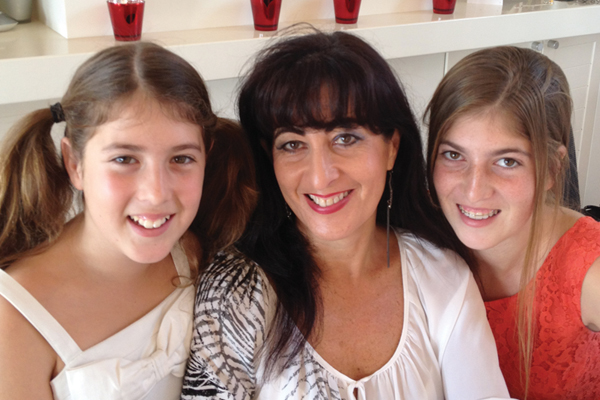 It is never too late and you’re never too small or too womanly to start saving By Nakita Ardern What would the state of the New Zealand economy look like if people could effectively save? What if every individual was required to put aside a regulated amount for their retirement, starting in their adolescence? Think back yourself… if you were presented with a proposal in your youth to put aside a percentage of your earnings for your retirement, would you have taken it? Of course, with hindsight, most would agree funds spent on those Ace of Base CDs or Doc Martens could have been more effectively channelled elsewhere. Founder and Managing Director of Fisher Funds, Carmel Fisher, implemented this strategy with her two young daughters who today both hold impressive investment portfolios and are Kiwisaver members. "They enjoy receiving their monthly newsletters and seeing how their investments are growing," Carmel explains. "They lived through the global financial crisis and saw their small investments fall in value and then recover again… what a great lesson for a 15-year-old and 11-year-old to learn. Because they are Kiwisaver members, they cannot touch the money until they retire or buy their first home. This is fantastic because too often when things go wrong people pull their money out and run for the hills. When the girls reach adulthood I believe they’ll be much better investors because of this lesson." Carmel subscribes to the belief that the time to prepare is now and that saving for a rainy day is more important than ever… whether you have the benefit of time in your youth or are knocking on retirement's door. "As women, we are our own worst enemies," says Carmel. "When we're young, all we have to think about is ourselves so we spend all our disposable income confident in the idea that the future will take care of itself. When we get married and start families, they take priority and our funds are once again depleted. Once our children have flown the coop, we then focus on paying off our mortgages and only then does a retirement fund become important. "I don’t want to be the only woman in my retirement village who can afford to go on cruises and enjoy shoe sales," Carmel says. "Sadly, if statistics about the gender pay gap are to be believed – and they are similar the world over – my choice of shopping buddies might be limited. We’ve long known that women generally outlive men and that we are generally paid less than men. Better medicine and improved lifestyles are leading to longer lives for all, but women can still expect to live some five to ten years longer than men. As for the gap between what women and men are paid for the same job, there has been some progress, but the gap still exists and this makes a huge difference for women, in a bad way. "Our average investor with a lump sum investment comes to us at age 60. If these people are planning to retire at 65 that doesn't leave us very long to make any real returns on their investment. Whereas, if they had come to us 10 years ago, we could have done a lot more. If we women do live longer than our men, then we are going to need to start saving to look after ourselves - and for more than just five years before we plan to retire." Carmel insists that women should forsake any fear we have associated with money and instead take charge of our futures. "The number of people we come across who tell us they don’t have enough money to invest or don't know where to start is incredible. There should be no prejudice with money. You should be able to invest as little as $500 or $50 a month – everyone can start somewhere. Even getting into the habit of saving each week through a means like Kiwisaver is painless and when it comes time to retire or buy your first home you have a nice sum to work with. If you don't want to do Kiwisaver, instead of buying that second pair of winter boots - put that into an investment… you need to start with something today." Being brought up by her solo, school teacher mother, Carmel not only learnt the value of hard work but saw first-hand the effects of wise money management. "When my mother died, she didn’t have a whole lot of money to her name. She would have admitted that she made some bad financial decisions along the way – like we all have. I decided very early in life that I wanted to have more choices as I got older and I knew that to do so required some capital – not just a weekly/ monthly salary. Most people spend this on daily living so it is very hard to develop a nest egg." Carmel grew up in the Hutt Valley, Wellington, attended Sacred Heart College and then went onto Victoria University to follow in the footsteps of her accountant father who died when she was 11 years old. "I decided to follow in his footsteps to become an accountant but wasn’t as good as he was so changed to study finance – a relatively new discipline at university. The more I learnt about finance and the share market, the more it seemed like a logical way to make money – especially for a young person." Upon graduating with a degree in accounting in 1984, Carmel gained employment as a share broker’s assistant before moving to Prudential Portfolio Management in Wellington which at the time, was the financial hub of the country. "In those days we would meet with potential investors and talk about what they wanted in their portfolio and then we would write a letter recommending what shares they should buy or sell. We would post it off and wait for them to call or come in to see us to confirm the shares. My role was largely communicating with clients, which was a fantastic way to get to know people and what they wanted. I also had to write paragraphs about each of the stocks and through this I developed an interest in research." Carmel then made the move into the research team as an analyst. In this role she would visit with companies and decide which were buy, sell or hold opportunities. "This is what I loved and I knew it was what I wanted to be doing for the rest of my life." Using her newfound knowledge, as well as the intuition that would later see her rise to great notoriety in her field, Carmel experienced early success with some stock picks. "In 1984 in the New Zealand share market, you could buy almost any share and make money. This was punctuated by the 1987 crash which, with hindsight, I can say was the best thing that could have happened. As someone new to the industry it was a great experience to witness human nature take control through the highs as well as the lows of the grieving process that people go through when they lose money on share market investments. Whether it scares them from the share market forever or whether they go back in and recoup their losses. It was an invaluable time to be in the market and to learn." As well as experiencing the highs of the market herself, Carmel has definitely had some lows and knows how hard it is to recover from a loss situation. "It doesn't matter how prepared you were beforehand, a loss is a loss and nobody enjoys it - especially when you need to rely on the market to recover in order for your investment to recover. It takes patience and you do your woulda, coulda, shouldas. The worst thing to do is to take your money and put it in a bank. People hate hearing this but only time will help a bad investment. "The one thing we've learnt over the past five years is that diversification is absolutely vital. If you have five investments in various markets e.g. the New Zealand share market, the Chinese share market and one of them is in property and the other in fixed interest, you would do far better than if you have all your money in one market because they all perform so differently. The New Zealand share market has been one of the best performing markets over the last two years, but three years prior to that it was one of the worst. But you never know what is going to happen. No one rings a bell to say it's time to move into the next market now. The best way to cover yourself is to have your finger in several different pies." Carmel also learnt early on the differences between calculated investing and gambling. "There are certainly investors who I would describe as speculators because if you literally don’t do any research on an investment, be it on the share market, real estate or anything else and don’t have a basic understanding of what you’re buying, you are a gambler. You’re hoping that luck will be on your side. I can honestly say that every investment I have made I’ve understood, and through research I’ve decided to go ahead." One investment she didn’t have to do much research into was marrying Hugh Fisher, an IT specialist from Stokes Valley. The couple married in 1986 and would later move to Auckland in 1994 where Carmel took on a job at Sovereign Assurance as a portfolio manager. When her first daughter, Devon, came along in 1998, it became evident that managing a team of investment professionals as well as being a full time mother would not be possible. "Women in our industry are few and far between. That was the case 25 years ago and it remains the same today. It can be a tough industry for women to get into as it isn’t as flexible as other careers. If you’re an analyst and a company comes out with a profit result and you have to analyse that and make a recommendation to buy, sell or hold, you have to do that when the results come out, but if you’ve got a sick child or other commitments you can’t drop everything and go. "Hugh and I were married 14 years before we had our first child and after waiting that long I refused to be a part time mother. As I was thinking about what I was going to do, Sovereign came to me with a proposal to manage a sum of money. From there I developed a business around this idea of managing a fund which I could then offer to sell to the general public and grow the pool over time." Fisher Funds was born in 1998 from the Fisher family's Devonport home. Not long after, Hugh gave up his job at Telecom to join his wife in the business, and by word of mouth Fisher Funds quickly grew. "Before we knew it, we had $50 million under our management." Fourteen years later, Fisher Funds now manages more than $1.2 billion for over 130,000 investors. Carmel manages NZX listed investment companies Kingfish, Barramundi and Marlin and her working relationship with her husband can been described as enviable. "I think our relationship works because he knows the business as well as I do and his passion is the same as mine. It was harder when it was just the two of us because we talked as husband and wife and you’re not always as polite as you should be, but when there are others around, you have to talk as colleagues! He is at the other end of the office to me so that helps too." In 2001 when her second daughter, Aden, was three years old and staff numbers had grown to exceed what was allowed in their residential address, the Fisher Funds team moved into their current office in Takapuna that enjoys stunning views of Rangitoto. "I said from day one, if we were away from our competitors then we could achieve independent thought. We’re not bumping into our competitors who are telling us what they’re buying or selling and investors like the non-intimidating feel of our office. It’s a great place to work." Fisher Funds is one of the only companies to run an international equities book from New Zealand and Carmel is unsure why more don't do the same. "It's a costly exercise because to have my team based here, every time they want to visit a company, there are obviously travel and accommodation costs. Based on our investment philosophy where we need to know our companies, we prefer to have our team here and travel around to visit our companies and then come back and share their knowledge with the rest of the team. Everyone in our team that presents a new business idea must be reviewed by their peers. We had two members based in San Francisco but we found the distance problematic in terms of the team culture. Also we found we missed out on a lot because they weren't here to talk about their investments. Investors love the fact that they can call us from New Zealand and talk about their stocks in whatever market, whether it be China, the US or wherever." With 28 Auckland-based-staff going into the New Year, Carmel ensures that her key management are shareholders in the business - this way they’ll think and act like owners, therefore headhunting is less of an issue. "I look for honest, caring people. We’re dealing with people’s money here so you need to have a good set of values that earn the trust position that people put us in." Trust is something that is essential in Carmel's line of work, yet is so hard to attain. "I was working at home with my husband… why were people going to trust me to give their money to when they could put it safely in a bank? There was nothing we could do to make people trust us but we were absolutely honest in all that we did and delivered what we promised so there would be no reason not to be trusted." By developing transparency in her business, Carmel who recently celebrated her 50th birthday also developed a public profile… a position that came with its benefits but also its downfalls. A quick Google search reveals numerous media mentions, some related to Carmel’s business affairs and some hinting at more personal affairs such as her most recent home purchase. While regarding much of the publicity as unwelcome, Carmel acknowledges that it just comes with the territory. "I’ve developed a profile and I’ve done that deliberately because when you’re looking after peoples' money they like to know who it is they’re dealing with. They like to be able to come in and tell a person who they know when you have or haven’t done a good job." Through various media channels including a weekly newspaper column and regular radio appearances, Carmel explains, in a language a '10-year-old can understand', how the world of investing is continually changing. "You could do months of research and find the best investment in the world and then something can happen in New York or China and it can have a huge effect on your little investment here in New Zealand. That wasn’t the case 20 years ago. The world has become more interconnected therefore we need to work with a global perspective. We have high-frequency trading systems so at the push of a button so much can change so much faster than the days where the stock exchange was literally a room full of men waving papers around making transactions. There is a lot of short term volatility which makes it a scarier market than it was 20 years ago, but the way you make money hasn’t changed and if you get the fundamentals right then you’ll be set." While New Zealanders have been particularly guilty of excluding ourselves from the international markets, Carmel believes our lack of financial education excuses some of our poor attitudes around investing. "Kiwisaver is definitely helping. This generation of Kiwisavers will be better than the last generation who didn’t have exposure to the kind of financial education that has accompanied Kiwisaver." Carmel says that we are criticized for having a love affair with the property market and every time we get a bit of extra money we’ll buy a second house rather than diversifying. "A lot of people have bought investment properties thinking that will be a passive income because they can rent them out and that rent can be a nice income while they carry on doing their day job. It doesn't work out that well because if you lose your tenants for even a month, that passive income over a year compared to the amount you’ve invested can equate to just 3-4%. You might as well have put your money in a bank account and saved yourself the stress of managing tenants. There are lots of share market investments that you can simply set and forget. You put them in your bottom drawer while they pay you a dividend yield of 5-6% every year. That's beautiful. Particularly if those stocks, while they give you 5-6%, they can also grow in value by 1-3% every year (because they’re successful companies). After five years, you find they’re worth more than you paid for them so you can sell them and make a capital gain. That's as attractive as it gets. You don't have to find the next Trade Me or the next Apple to make good passive money, you just invest wisely and it's relatively easy to do." Nakita Ardern www.fisherfunds.co.nz |
|
|

|