Power Profile > Queen Bee


|

|

|
|
|
|
Queen Bee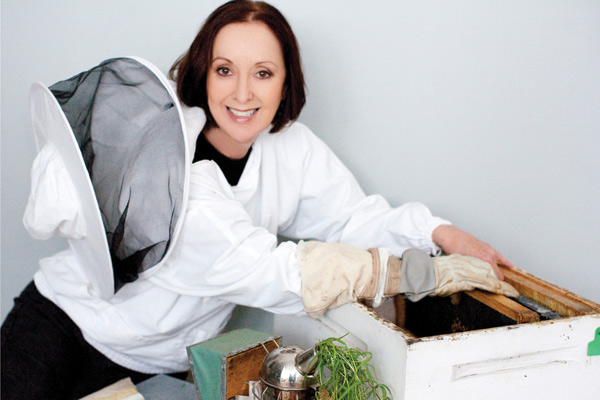 When was the last time you were stung by a bee? Chances are not recently! The reality is that there are so few feral bees in our natural environment that many have never experienced a bee sting. Albert Einstein famously said, “If the bee disappears from the surface of the earth, man would have no more than four years to live. No more bees, no more pollination … no more men!” Thus, with colony loses increasing worldwide interest in the protection of bees is more important than ever. Market access, general rules and regulations, the testing regime and consumer awareness has heightened for an industry that has thrived in New Zealand for over 150 years. On March 10, 2011 there were 3,251 registered beekeepers, 23,395 apiaries and 388,369 beehives in New Zealand. The bee industry, which contributes an estimated $5 billion p.a. to our nation’s economy, plays a crucial part in New Zealand agriculture; pollinating around one third of our food sources. Now one of our own has been especially chosen to represent New Zealand in the fight to protect the precious insect. Maureen Maxwell has been appointed regional president for the Oceania Commission of Apimondia, the International Federation of Beekeeping Associations. This is the first time this role has been open to a member of the Oceania region, and it allows international research to be directly communicated to local beekeepers and takes our beekeepers problems to the international forum. “Imagine a dinner plate but without all of the lovely, fresh, colourful foods with their abundance of vitamins,” Maureen explains. “Bees create naturally fertile pastures for many animals supporting our wool, meat and diary industries. Crops like coffee, chocolate, cotton and biofuels rely heavily on bee pollination. Without bees more artificial fertilisers would be necessary, with potentially more destructive runoff into our lakes and rivers. With the expansion of these primary industries and the increase in the chemicals and pesticides used to accelerate their growth many honey bees are being poisoned.” Maureen explains how the humble home gardener can also be harming bees. “People don’t realise the products in supermarkets that we spray on our roses and tomato plants are killing our bees. It’s so important that in every way possible we protect them.” Reporting to the international president, Gilles Ratia, Maureen will play her part in assisting beekeepers in the region by facilitating the exchange of information via congresses and symposia where beekeepers, scientist, honey-traders, technicians and legislators meet to listen, discuss and learn. “We are highly regarded as a nation that, when it comes to beekeeping, punch well above our weight. It's my intention to be the voice of the Oceania region and specifically create more awareness about beekeeping, because it has the potential to be New Zealand's next industry darling. “In terms of differences in beekeeping between New Zealand and the rest of the world we have developed a test management strategy to eradicate foulbrood disease without the use of antibiotics – it’s a bit like foot and mouth disease for bees. Without treating the disease with drugs, we are able to offer our product to the market as the finest and purest honey in the world. It is always going to cost us twice as much to get our product out there because of our location so we need to have a real point of difference. "In the past farmers in New Zealand have been lucky enough to have plenty of feral bees. Then the yarroa arrived and changed all of that. Now honey bees can't survive here without human intervention. It’s become essential for us to find the best way to protect our bees. Without bee pollination we’ll lose so much.” Maureen has had a long association with the food and wine industry in New Zealand, being one of the co-founders of Matua Valley Wines. In her late teens, Maureen teamed up with brother, Ian Margan, and Bill and Ross Spence and bravely planted the first sauvignon blanc in New Zealand back in 1974. Later she founded The Hunting Lodge Restaurant and more recently BeesOnline. A brush with cancer in 1989 made Maureen more environmentally minded – her remedy, a more natural lifestyle based on organics, sustainability and honey of course. “The edge tends to be my comfort zone,” Maureen says. “I tend to be up there leading people in new directions. I saw potential for the wine industry in New Zealand and when I got into the honey industry I saw similar avenues to market the product.” BeesOnline started from Maureen's kitchen in 1999. A chef and passionate 'foodie' Maureen started out with a hive in her back garden and discovered the wonderful fresh taste of raw honey. From there BeesOnline was established as a business supplying delicatessens and restaurants in Auckland and then gradually throughout New Zealand. “When the business started I had some old heritage Black boy peach trees that weren’t producing any fruit, so I bought a beehive from a friend for around $120, took some night classes and within six months I was amazed at the quality of the fresh product coming straight out of my garden.” Before long, Maureen had bought more hives, outgrown the house and bought four further hectares of land on the main road to Muriwai Beach in Auckland. “My business success has always been to have a point of difference. When I first got into honey a decade ago, the big darling of the industry was the UMF Manukas. There were several companies doing that very well so I thought I would use my food and wine background to take something that you spread on toast into the gourmet food market. Now things like premium ice cream, muesli (or breakfast cereals), marinades and dressings are sweetened with honey.” When varroa hit it was mandatory for Maureen to treat it with chemicals so she lost organic certification on her hives, and with it the premium market for her product. “It meant that I had to be resourceful, and because my factory was still organic we engaged with other beekeepers throughout the country who could still produce organically. I was then able to evolve the business to represent different crops and regions. This taught me to consider every opportunity presented to me and make the most of it.” Maureen explains how in her ‘first life’ she studied architecture and industrial design at Auckland University while working at wineries in west Auckland, close to where she grew up. Back then it was farmland and she thrived in the rural life, just as she does today. In her spare time Maureen loves flying helicopters and mountain biking – in fact anything that gets her out into the environment. Maureen loves living on the edge. “It’s my comfort zone,” says the former hang-glider enthusiast. She has an HT licence, a gun licence and a fishing licence, but what truly endorses this daredevil is the fact that she is seriously allergic to bees. “I discovered this early on in my business,” she assures. "I’ve always had respect for bees, I just have more respect for them now. I believed that there was so much potential in this industry that I chose to continue despite my allergy. Honey bees are mercenary. They will only sting if they think their hive is being threatened. Then of course they die so they’re not going to sting unless they have to. “In its lifetime a bee will produce a twelfth of a teaspoon of honey. It will visit 200 flowers at 28km an hour – it literally works itself to death!” The 55 year-old will leave her Waimauku base twice a year to represent Oceania in Rome at the international forum. Drawing on her previous experience, Maureen will bring a valuable commercial perspective to the role. "While other board members come from a science and technical background, I think I can bring a real difference from an entrepreneurial and marketing perspective,” she says. "It's a real honour to be a part of this group, and it's even more special being the first Kiwi to do it." A fervent advocate for beekeeping and the honey industry, Maureen sees honey as New Zealand’s next big thing from an export point of view. She is passionate about the role of beekeeping in our primary sector and the need to safeguard its future. "Beekeeping plays a crucial role in primary production in New Zealand – not just in the production of honey and propolis, but in pollination of our horticultural crops. Bees are under a global threat of rapidly declining numbers through varroa, pesticides, disease, loss of habitat, forage and fodder,” she warns. Since selling BeesOnline three years ago Maureen has been busy with her work as an international honey judge and presenter, a honey ambassador, being the New Zealand National Beekeepers Association Executive promoting bee health on a political level, and promoting bee-friendly planting through her company, Wild Forage. In collaboration with Wildflowerworld.com, Maureen has developed a wildflower seed rescue remedy for bees that provides a lifesaving source of nectar and pollen. All proceeds from the sale of these seeds go to the National Beekeepers’ Association of New Zealand to help New Zealand bees. If Maureen could change one thing worldwide about the way bees are farmed she would implore beekeepers to respect the bee’s natural environment. “A lot of countries have commercialised beekeeping and horticulture to such a degree that it has become as much like factory farming as with hens or pigs. We need to respect that bees are helping us. “It goes back to only taking the surplus honey from the hive and leaving the bees with sufficient natural honey to survive over the winter months. We need to go forward with the modern knowledge we have, but also respect the traditional beekeeping techniques and the needs of the bees.” Nakita Ardern www.wildforage.co.nz How to get your own beehive started: Find a mentor in the beekeeping industry in your area. Work with the National Beekeepers Association. They can put you in touch with local branches and clubs. www.nba.org.nz Some questions you may like to ask yourself before you start beekeeping are: Does the Council permit beekeeping in an urban area? Some have by-laws that allow beekeeping until they become a problem. Will your neighbours object? If you’re thinking about keeping bees, October is a great time to start. In October, hives are just starting to expand and early swarms could be issuing. If you keep bees and you live in New Zealand it is a legal requirement that you register your hive(s). Apiary sites must be registered with the Management Agency through their contractor, AsureQuality Ltd You can buy a beehive for around $150-$200. The best thing you can do is join up with a local bee club and start getting the benefits of bee pollination for their gardens and pantry. A lightweight jacket with attached veil is a good choice when doing regular beework. A full bee suit and gloves are needed when doing heavy-duty beework, when the weather isn't just right and the bees are not in a great mood. A beekeeper's best friend is his or her smoker. A smoker is simply a cylinder with a bellow attached. In New Zealand there are two different types of bees so do your research first about which will produce the best result. Source: www.nba.org.nz Honey how to … Let food be your medicine. Having a good diet is one of the best things you can do for your health. Honey is not just for toast and glazing hams. Use it in marinades, salad dressings, sauces, custards, and in cooked and fresh fruit salads. Honey will promote healing in sore throats, cuts, burns and acne. Honey is great to assist recovery after heavy physical work or sport. Try a little in your water bottle with lemon or fresh mint and put some on your face before a workout to keep skin looking young and radiant. Granulated honey works as a great natural exfoliant. A few drops of honey with some water makes a great face cleanser. Use as a natural sweetener in your teas and coffee or wherever you use sugar, as it has a low GI, antioxidants, antibacterial benefits and natural minerals. Warm milk, honey and fresh nutmeg can aid a sleepless night. Enhance the natural sweetness of fruits and vegetables with a small amount of honey. Working Bees Female beekeepers throughout New Zealand are keeping the hive alive. Carolyn Ball Carolyn Ball is a Director of 100% Pure New Zealand Honey Ltd, which she co-founded with partner, Steve Lyttle nearly two decades ago in Timaru. Carolyn knows the business and the industry inside out, and plays a pivotal role with 100% Pure New Zealand Honey Ltd controlling the financial, export and administration demands. Check sense www.purenewzealandhoney.com Hekia Parata Prior to entering Parliament in 2008, Hekia Parata combined highly successful careers in the New Zealand public service and business with husband and partner, Sir Wira Gardiner. Together they built a consultancy practice in public policy, negotiation, education and export Manuka honey company, The Kiwi Manuka Honey Company Ltd. Pam Flack & Barbara Bixley People and bees are at the heart of Arataki Honey. From pollination of New Zealand's valuable horticultural industry through to the extraction and packing of honey, Arataki Honey is committed to promoting good bee health and workplace enjoyment – for the bees and their human workmates! Arataki Hawke's Bay, located at the original site in Arataki Road, Havelock North, is managed by members of the original family – Ian Berry, Pam Flack and Barbara Bixley. www.aratakihoneyhb.co.nz Wendy Mossop At the tender age of 16, Neil Mossop had several hundred beehives and became self-employed until 1975 when his father and founder, Ron offered him a partnership in the Tauriko, Bay of Plenty based business. This partnership was continued for several years until 1981, when Neil and Wendy bought Ron’s share and formed their own partnership. Since then Neil and Wendy have improved and grown the business in all areas, increasing turnover 20-fold. www.mossopshoney.co.nz Karlene Shaw-Toomey Earthbound Honey was established in 2006 by Karlene and Terry Shaw-Toomey. Wanting a better life for their three boys, Terry left his job as Production Director for a city-based communications company and started working with bees. One year later Karlene reduced her workload as a landscape gardener and joined him. They now both work from their 11 acre property in the beautiful Bethells Valley making quality raw, organic honey. www.earthboundhoney.co.nz Sharyn Woodnorth The launch of the J. Friend and Co NZ Artisan Honey range is the realisation of a long held desire by Jeremy Friend and Sharyn Woodnorth to introduce others to the myriad of flavours good quality single varietal honey provides. www.nzartisanhoney.co.nz Melanie Beehre Darcy and Melanie Beehre are the beekeepers behind Your Pure Honey Ltd. For the past few years they’ve been gathering active Manuka honey from remote New Zealand forests. They work to produce the highest quality, chemical free honey. www.yourpurehoney.com Sue Williams Owned and operated by Andrew and Sue Williams, 309 Honey could be called a boutique beekeeping operation because they are a small primary producer of a purely local Manuka honey and that they also extract and package their own honey under licence on the 309 Road. www.309honey.co.nz Audrey Stuckey Waitemata Honey Co Ltd is a family owned and operated business, run by husband and wife, Neil and Audrey Stuckey. From producing honey off their own hives to marketing the finished retail packs around the world, they can offer the consumer a quality product every time. www.waitematahoney.co.nz Kate White The Waitaki Honey Company is a 70-year-old, high country, family enterprise operated by Kate White and Peter Irving. Peter's father started the business in 1940 with only 150 hives. Today, Kate and Peter run 3,500 hives. Waitaki Honey has become the largest producer of certified organic honey in New Zealand. www.waitakihoney.co.nz |
|
|

|