Articles > February/March 2012 > Fiona's World

|
|
Fiona's World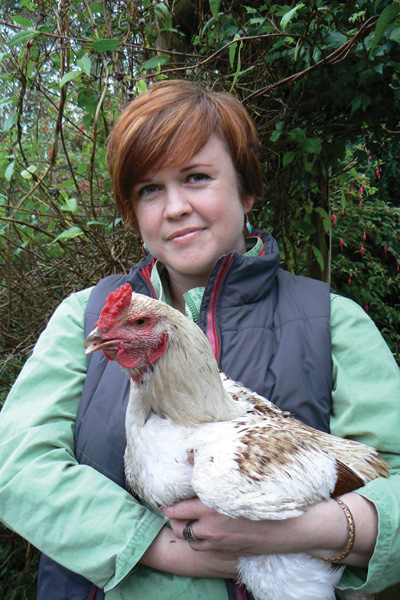 From the Greasy Spoon to the English Channel, one Kiwi chef is making a mark of delicious proportions From the Greasy Spoon to the English Channel, one Kiwi chef is making a mark of delicious proportionsFiona Were, Head Chef at The Greenbank Hotel in Cornwall, is testimony that a little goes a long way. After training at Christchurch Polytechnic back in the early 90s she has been in the United Kingdom for 14 years, having met her partner, Iain while he was working and travelling in New Zealand. He then took her back to his beloved West Country. Her career to date includes being Training and Development Chef for Jamie Oliver’s Fifteen Cornwall in its inaugural year and she has been named as one of the top 10 female chefs in the United Kingdom in the Independent on Sunday. Fiona’s style of cooking focuses on fresh, local and seasonal produce with international twists. She is passionate about only using free range poultry and fish caught using ethical methods from sustainable resources, and will be ensuring this ethos is continued wherever she works. True modern, British cuisine is Fiona’s signature. She fuses styles, techniques and flavours to shape an irresistible menu. Bursting with innovative touches every dish promises to fire the imagination and palate. What was your first job in a commercial kitchen? I worked as a kitchen hand at a 'greasy spoon' cafe in Napier. My boss was a Malaysian woman and she was very strict. I worked hard on my holidays from university. When we moved to Christchurch, I started as a kitchen hand at the Hotel Russley then moved on to Michaels and the Park Royal while I was at college doing my chef training. Are you now a citizen of the United Kingdom? No, I have residency, which means I can stay indefinitely. I have thought about having dual citizenship, but to get that a British passport would cost around £700. I can think of better things to spend that kind of money on. What do you miss about New Zealand? Feijoas, whitebait, vineyards, yams, kumara, being able to have sushi any day of the week, being able to be in the countryside and not see anyone else Tell us how you met your partner, Iain: We met at a youth hostel in Parnell. I was in Auckland, temporarily staying at the hostel until I could find a flat and trying to save money so I could travel to the United Kingdom. Iain was back at the youth hostel after travelling around New Zealand. He was working over in Brown's Bay. I already had my ticket booked to come to the United Kingdom before we met, but ended up bringing my travel plans forward. Iain's visa was coming to an end and he was returning to the United Kingdom to attend university. Do you have children? I have a family of 'children' at work. I also have 20 or so chickens and a cat that always seems to be hungry for food and attention, so that is quite enough for me to be honest. What is your favourite thing about Cornwall? Our 160-year-old granite miner's cottage, with sweeping views across fields out towards St Ives. It has a wonderful wood burner set in an inglenook fireplace and stacks of character features. We have a garden big enough to grow our own vegetables, apple trees that produce crops large enough to make gallons of homemade cider and space for our flock of rare-breed Indian Game and Red Dorking chickens. Cooking is mostly learned in a kitchen from masters. Who have your mentors been and what key skills have you adapted from them? Eleonora Kramer, a Bavarian Chef, was a huge influence on me when I was working at the Park Royal. She was inspirational, incredibly talented and a tireless perfectionist. I have worked with many chefs during my career, and I believe you learn something from everyone you work with, even if it is something small, but Eleonora instilled the need for dedication and hard work to gain respect in this industry. I have recently attended a chocolate course at Steins Cookery School, taught by Mark Tilling, champion British Chocolatier, and it was amazing. Now I am collecting equipment to enable me to do chocolate work. Why is free range produce so important to you? It seems pretty obvious to me. I cannot comprehend why anyone doesn't consider it important. However, I know there is a long way to go, and it’s not just down to living conditions. We have all done this to the food chain because we want vast quantities of cheap chicken and we want it quickly. This means that we have been so clever to breed types of poultry that are table-ready in eight weeks. We have tried rearing two chickens of the commercial breed at home, in the hope that they would have a better life roaming around, but sadly they just wanted to sit around and eat all day. It was a pretty miserable existence for them and contradicted the reasons why we keep chickens ourselves. The hen eventually could not stand as her legs were incapable of supporting her weight after just nine weeks. We cross our rare breeds at home, using breeds popular for this purpose since Victorian times, for table birds and they are not ready for 27 weeks. Their bones are properly formed, they have a varied diet and are free to exercise at will, which they do. Battery cages are being banned in the United Kingdom in early 2012, at last. We started our poultry keeping with five ex-battery hens, which was a very rewarding experience, but the poor things were so worn out after intensively laying an egg nearly every day they did not live for long after leaving the battery. They came to us sparsely feathered, with their beaks trimmed and very pale combs. In the relatively short time we had them they quickly adapted to the outside world, performing normal chicken behaviours such as scratching and dust bathing, which they had never done in their battery cages. Battery farming and intensive rearing of poultry is abhorrent to me.  
|